Labels

Beer (13) Bread (1) Burger (1) Cheese (6) Chinese (2) Coffee (4) Cracker (1) Deli Counter (2) Deli Meats (5) Dessert (4) Drinks (5) Fruits (4) Hot Sauce (1) Meat (7) Middle Eastern (3) Noodles (3) Oils (2) Pickles (1) Seafood (10) Snacks (2) Spices (2) Spirits (2) St. Lawrence Market (9) Vegetables (5) Wine (2)
Showing posts with label Dessert. Show all posts

Sunday, March 4, 2012

Day 71: Double Devon Cream

Sweet, silky on the tongue. Characteristically milky - it tastes like the milk I remember when I was a kid. But it is still firm enough until it just melts on your tongue and envelopes your taste buds.

Amazing on home made freshly baked scones, or even just plain fresh fruits.

On Double Devon Cream (from englishtea.us)
Devonshire is in the south of England, on the coast, and well known for it’s very rich and creamy dairy products.

Double Devon cream is just as it sounds. It is the creamiest of the cream from the Devonshire Jersey cow! It’s really not whipped – it’s just so thick that a knife can stand up in it! It comes close to butter, but has a unique creamy flavor that differs from butter. It can be used on scones, crumpets, fresh fruit - pretty much a topping for any dessert also including pies, muffins, waffles, pancakes.... it can be added into pasta to add a richness.

You will often find that clotted cream and double devon are used interchangeably, but there is quite a difference between Devonshire Clotted Cream and Double Devon Cream.

The process of making Clotted Cream is very extensive involving leaving it in a warm area for hours, allowing it to sour a bit, and the cream forms a bit of a skin and turns yellowy and clotted. Then, it is carefully scooped from the top of pan and stored for a time in a cool place.

Apparently, fresh Clotted Cream is impossible to find in Canada. That’s because it’s a very specialized art, and requires a Jersey cow that produces a rich, fatty milk. The only Devonshire Clotted Cream you will find is imported in jars. But in England it is delivered fresh.

Friday, June 17, 2011

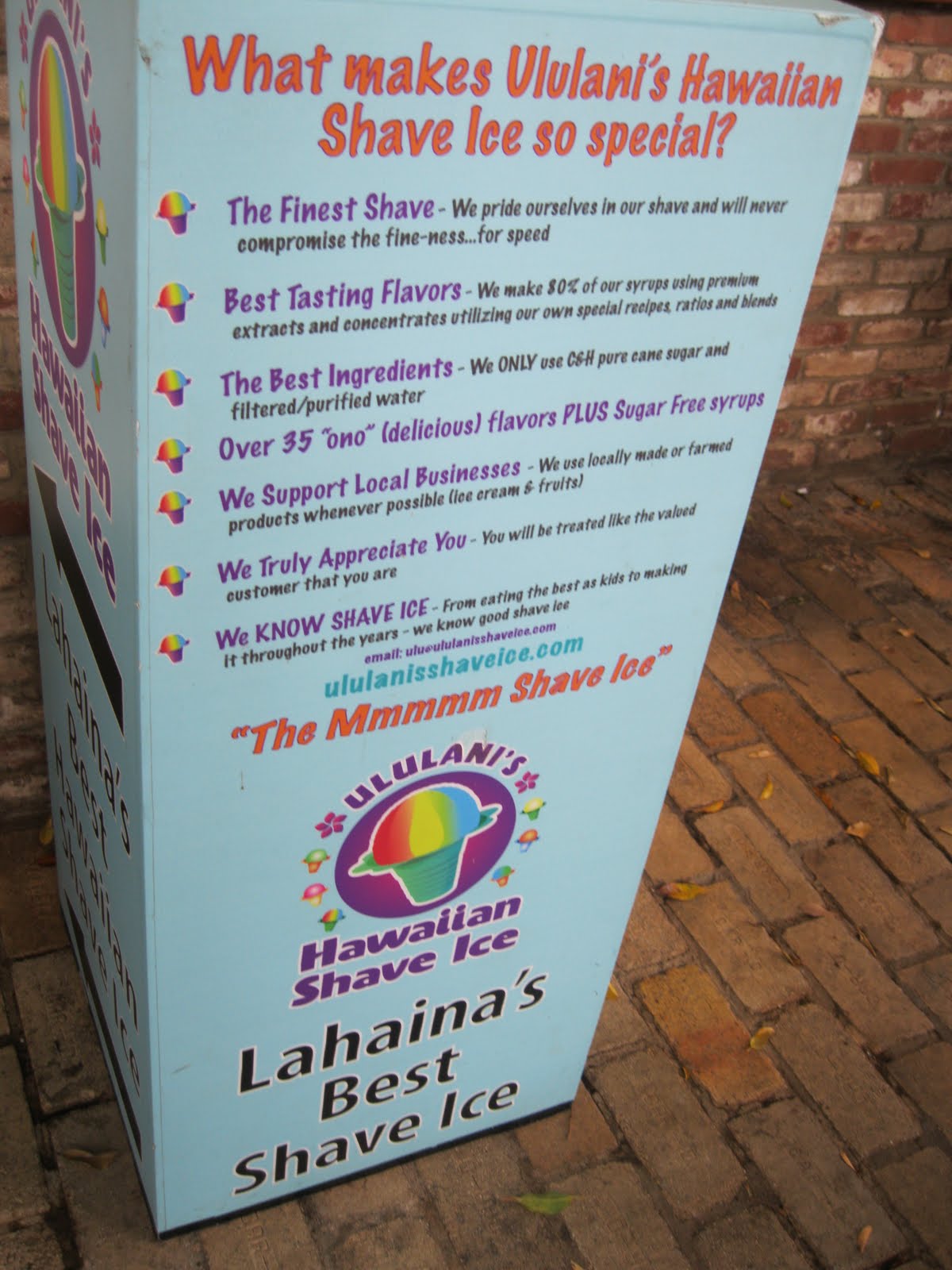
Day 37: Shaved Ice from Ulalani (Maui)


My first shaved ice was on Oahu island. For me, the secret to a good shaved ice is the condensed milk which gives it a milky texture. So I found this place by visiting all the stores and seeing if they made the effort to put on condensed milk - otherwise you're just eating a slush puppie. The second secret is the ice, which has to be so soft, it feels like ice cream in your mouth. The third secret is copious amounts of syrup. I hate dilute flavoured ice. Just not good.

Ulalani's is all of that. And an amazing atmosphere underneath a beautiful tree where you can escape the heat. Lime flavour, mango, guava, and coconut are amazing.

See below for a sign outside the window as to why it is so good.


Saturday, April 30, 2011

Day 21: Halo Halo Ice Cream from Casa Manila

Halo Halo is a Filipino dessert which quite translates to 'mix mix' as you are given taro ice cream, with toppings on the side, and you mix them together yourself (if you see in the pictures, one is pre- and one is post-mixing. You can see why you have to mix it yourself. You would never want to be presented with the grey mush). Typical toppings include condensed milk, kidney beans, garbanzos, sugar palm fruit (kaong), coconut sport (macapuno), plantains caramelized in sugar, jackfruit (langkâ), gulaman, tapioca/sago, and even flan! So delicious. But so sweet and the serving is enormous, so it's definitely shareable. Amazing stuff!

Sunday, April 24, 2011

Day 8: Thyme Honey from Orino brand in Greece


I love the taste of honey, especially honey with a complexity of flavour that comes from the flower on which is pollenates. Beekeepers will claim that they can taste the flavour of the actual fruit in the honey, although I've never had that experience.

My mother, father, and sister returned from Greece recently and gifted me with this thyme honey, meaning that the bees hung around thyme flowers.

The colour was a lighter yellow and perfectly clear, the flavour complex, with just a hint of blueberry jam and bubble gum. It was great just on its own, or with a lighter cheese.

Apparently the Greeks have a long history of honey, and the nature blesses its lot. And of exceptional quality is honey coming from thyme. From honey-health.com:

"The solemn and prominent part honey played in the history of Greece is conclusively proven by its mythology. Ambrosia, the food, and nectar, the drink of the gods, were made of honey. The Iliad (XI. 630) refers to honey as the food of kings. The honey of Mt. Hymettus was a daily food of Athens. This mountain was covered with odoriferous wild flowers, principally thyme, and the air was scented with the fragrance of the blooms. The bees were partial to these hills. Ancient Attica, with its area of forty square miles, recorded twenty thousand hives during the time of Pericles (429 B.C.). All ancient Greek authors praised the medicinal and nutrimental value of Attic honey, "the crowning dish of all feasts." The oldest ruins in the rural districts of Greece are buildings which originally housed the hives. These stone edifices were built high, to outwit the cunning of the bears, arch enemies of bees and bosom friends of honey."